
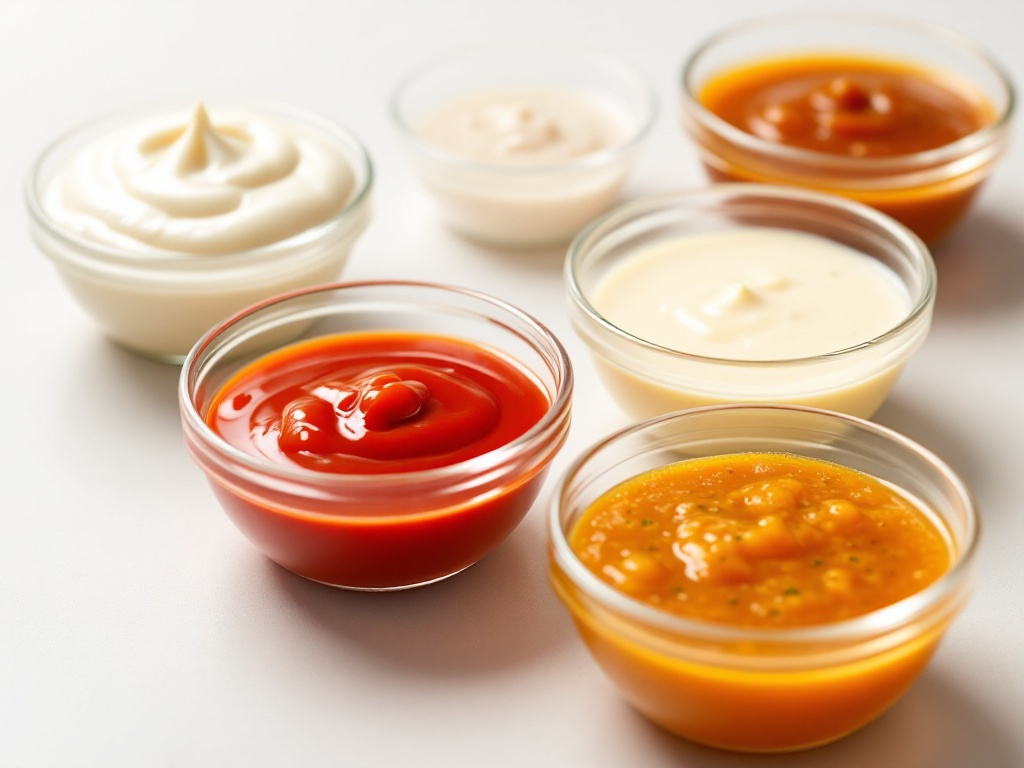
SAUCES & CONDIMENTS · SAUCES & DRESSINGS
Sauce & dressing kosher certification.
Dressings and sauces — dairy bases, wine, vinegar, and anchovies verified.
WHAT WE CHECK
Dressings hide several concerns
Creamy dressings can be dairy, vinaigrettes can use wine vinegar, and Caesar and Worcestershire often contain anchovies. We verify each input and clearly label dairy status.
Dairy Bases
Creamy and cheese-based dressings reviewed; status labeled clearly.
Wine & Vinegar
Wine vinegar and grape-derived inputs verified to source.
Anchovies
Caesar and Worcestershire often contain fish — verified and labeled.
A deeper look at sauce & dressing certification
Why sauces and dressings hide several concerns at once
A dressing or sauce can look like a handful of pantry ingredients while quietly containing three or four separate kosher concerns. Creamy dressings introduce dairy, vinaigrettes often lean on wine vinegar, Caesar and Worcestershire commonly carry anchovies, and the flavor systems underneath it all bring their own questions. That combination is exactly why sauces and dressings anchor our sauces & condiments certification program, where each concern is checked individually rather than as one finished recipe.
What we verify in sauces and dressings
Dairy bases and designation
Buttermilk, cream, cheese, and yogurt turn a dressing into a dairy product, which changes both its certification and how your customers can use it. We confirm every dairy-derived component and establish the correct designation so a ranch or blue cheese dressing is labeled accurately, while a vinaigrette that is genuinely pareve is documented as such.
Wine and vinegar
Vinaigrettes and pan sauces frequently use wine, wine vinegar, or balsamic, all of which carry special kosher handling requirements. Grape-derived ingredients are treated differently from other vinegars, so we verify the source and production of each one. Our guide on whether wine is kosher explains why grape products require this extra layer of review.
Anchovies and fish components
Caesar dressing, Worcestershire sauce, and many umami-boosting sauces contain anchovies or fish extracts. Fish must come from a kosher species and be verified to source, and fish contact also affects how the finished product can be paired. We identify these components even when they appear only as a background “natural flavor.”
Flavors, emulsifiers, and thickeners
Beneath the headline ingredients, dressings rely on flavor systems, emulsifiers, and stabilizing gums that each need their own verification. We trace these supporting ingredients to source so a dressing is acceptable all the way down, not just at the top of its ingredient statement.
Shared lines and changeovers
Many facilities run dairy and pareve dressings on the same equipment, so we review your cleaning and changeover procedures to make sure a pareve product does not pick up a dairy status from a previous batch. Getting the designation right on shared lines protects both your label and your customers.
Certifying your dressings with Pure K
Our team untangles multi-concern recipes every day, from creamy dairy dressings to wine-based vinaigrettes and anchovy-forward sauces. We verify each component, set the correct designation, and issue documentation your buyers can trust. To begin, request a free, no-obligation quote.
Ready to certify your dressings?
Start with a free, no-obligation quote tailored to your sauce and dressing products.
- Free, with no obligation
- A real person replies within one business day
- Clear on timeline and cost up front
- Your formulations stay confidential
More in Sauces & Condiments